
January 16, 2026
Duke Kunshan University — China is the world’s largest producer and consumer of tea, and Yunnan’s ancient forest tea systems represent one of its most ecologically and culturally significant cultivation models. Unlike monoculture terrace plantations, these agroforestry systems maintain high native tree diversity, canopy cover, and low-intensity management practices, making them promising candidates for biodiversity conservation. At the same time, global and domestic trends show rising interest in sustainable and high-quality agricultural products, suggesting potential market opportunities for an eco-label that differentiates biodiversity-friendly tea.
Against this backdrop, the Environmental Research Center (ERC) and Biodiversity and Sustainability Lab (B-Lab) has released a new industry report exploring the feasibility and potential impact of introducing a biodiversity-friendly tea certification in China, with a focus on Yunnan’s forest tea systems. Drawing on fieldwork conducted between 2023 and 2025 in Xishuangbanna and surrounding regions, the report examines how traditional agroforestry tea landscapes already embody many of the ecological qualities that global sustainability standards aim to promote, however remain undervalued within existing tea certification frameworks.
The report combines insights from ecological surveys, market analysis, and in-depth interviews with tea farmers to assess whether a biodiversity-focused certification could simultaneously strengthen forest protection and rural livelihoods. In particular, the report focuses on market dynamics, consumer perceptions, policy alignment, and supply-chain incentives. While global and domestic demand for sustainable products is growing, the report identifies key challenges in consumer awareness and producer buy-in when creating a biodiversity-friendly certification program. At the same time, it highlights major opportunities such as emerging youth consumption trends, strong policy alignment with biodiversity goals, and an untapped market for biodiversity-friendly tea.
Based on data collected in tea farms throughout Yunnan, the report proposes three core criteria for a biodiversity-friendly tea certification, including diverse vegetation structure, sustainable tea management practices, and stringent habitat protection. These standards are designed to balance ecological rigor with feasibility for smallholder farmers.
The findings suggest that a biodiversity-friendly certification could:
- Formally recognize and highlight traditional forest tea systems;
- Create market differentiation and price stability for producers;
- Incentivize ecological restoration in monoculture plantations; and
- Strengthen climate resilience across the tea sector.
By positioning biodiversity not only as an ethical goal but as a market signal and risk-management strategy, the report offers a new pathway for aligning conservation with economic value in one of China’s most culturally significant agricultural industries.
The full report is now available online.
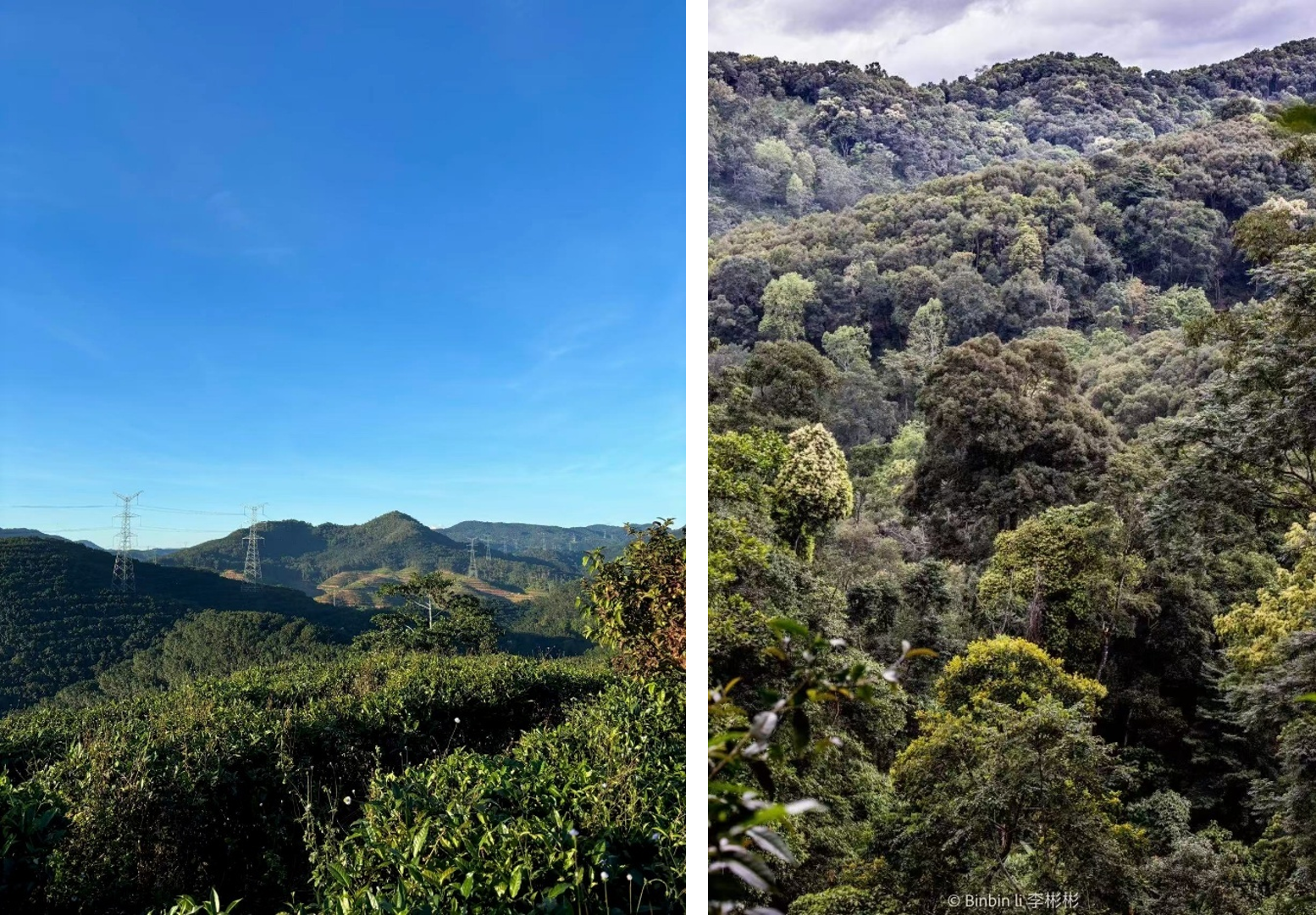
Terrace tea fields (left) versus forest tea canopy (right) in Xishuangbanna, Yunnan (Photos: Judy Song, Binbin Li)
